

What principles, requirements, and inspection standards should be met for a food dust-free workshop
The dust-free workshop for food packaging is working satisfactorily, and it is necessary to prove its principle requirements:
The air supply volume of the dust-free food packaging workshop is sufficient to dilute or eliminate indoor pollution.
The air in the dust-free food packaging workshop moves from the clean area to areas with poor cleanliness, and the movement of contaminated air reaches the lowest level. The direction of air movement at the entrance and in indoor buildings is correct.
3. The air supply in the dust-free food packaging workshop will not significantly add indoor pollution.
4. The movement of indoor air in the food packaging cleanroom can ensure that there is no high concentration gathering area in the cleanroom.
Assuming that the cleanroom meets the requirements of the above principles, its particle concentration or microbial concentration (if necessary) can be measured to acknowledge that it has reached the standard of a clean room.
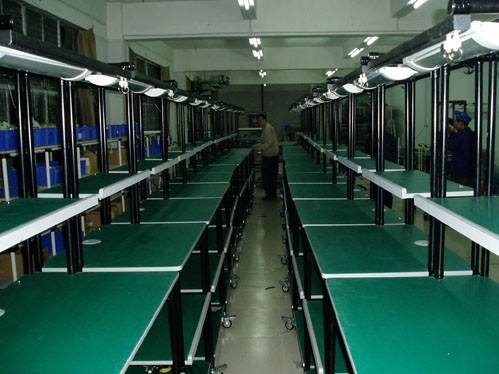
Inspection of Clean Room for Food Packaging:
1. Supply air volume and exhaust air volume: Assuming it is a turbulent clean room, the supply air volume and exhaust air volume need to be measured. If it is a one-way flow clean room, its wind speed should be measured.
2. Airflow control between zones: To prove that the airflow direction between zones is correct, that is, moving from clean areas to areas with poor cleanliness, it is necessary to test: (1) the pressure difference between zones is correct; (2) The airflow direction at the entrance or openings on walls, floors, etc. is correct, that is, moving from the clean area to areas with poor cleanliness.
3. Filter leak detection: The high-efficiency filter and its outer frame should be inspected to ensure that suspended pollutants do not pass through:
(1) Damaged filter; (2) The gap between the filter and its outer frame; (3) The other parts of the filter device invade the room.
4. Isolation leak detection: This test is conducted to prove that suspended pollutants do not penetrate through building materials into the clean room.
5. Indoor airflow control: The type of airflow control inspection depends on whether the airflow in the clean room is turbulent or unidirectional. If the airflow in the clean room is turbulent, it is necessary to verify that there are no areas with insufficient airflow in the room. If it is a one-way flow clean room, it is necessary to verify that the wind speed and direction throughout the room meet the planning requirements.
6. Suspended particle concentration and microbial concentration: Assuming these tests meet the requirements, the particle concentration and microbial concentration (when needed) will be measured later to verify their compliance with the cleanroom planning requirements.
7. Other inspections: In addition to the pollution control inspections mentioned above, it is sometimes necessary to conduct one or more of the following inspections:
● Temperature ● Relative humidity ● Indoor heating and cooling capacity ● Noise level ● Illumination level ● Vibration level
Article source: Guangxi Purification Engineering http://www.xwsk.com.cn/
-
07-01
Guangdong Purification Engineering: What are the cleanroom construction companies?
Our cleanroom needs to go through several processes to be built. In the early stage, we need to start with the design, followed by the specific construction stage, and then the acceptance and other pr
-
12-19
A Brief Discussion on the Development Factors and Variables of Hunan Purification Engineering
Purification engineering can effectively utilize the six cost element variables mentioned below, provide selectable planning plans, improve fundamental purification engineering planning and standards,
-
11-27
How to effectively utilize the air conditioning system in the purification workshop of Hunan Purification Engineering Analysis
The energy consumption of HVAC system accounts for about 60% of building energy consumption, so energy conservation of HVAC is particularly important in building energy conservation. The purification
-
11-20
How to Reasonably Control and Mediate the Cost of Hunan Purification Engineering Analysis
When planning the manufacturing of purification engineering, how to achieve maximum benefits with minimal investment and complete maximum output has always been a highly valued issue for purification