

How is the air pressure regulated for Guangdong purification projects
For most clean spaces, in order to prevent external pollution from entering, it is necessary to maintain an internal pressure (static pressure) higher than the external pressure (static pressure). The maintenance of pressure difference should generally comply with the following criteria:
The pressure in a clean space should be higher than that in a non clean space.
2. The pressure in spaces with high cleanliness levels should be higher than that in adjacent spaces with low cleanliness levels.
The maintenance of pressure difference relies on the fresh air volume, which should be able to compensate for the air leakage from gaps under this pressure difference. So the physical meaning of pressure difference is the resistance of air leakage (or infiltration) through various gaps in the clean room.
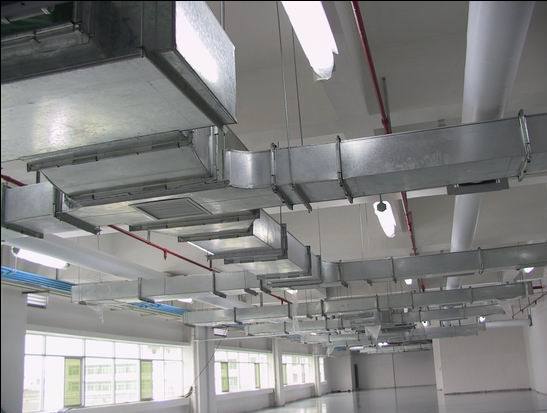
Rules for airflow velocity in clean rooms
The airflow velocity to be commented on here refers to the airflow velocity in the clean room, and the airflow velocity in other clean spaces will be explained when commenting on the detailed equipment.
Regarding turbulent flow cleanrooms, the concept of air exchange rate is mainly used to reduce indoor pollution by relying on the dilution effect of air, rather than directly using the concept of velocity. However, there are also requirements for indoor airflow velocity;
(1) The airflow velocity at the outlet of the air supply outlet should not be too high. Compared with a simple air-conditioned room, it is required that the velocity decay be faster and the dispersed viewpoint be larger.
(2) The velocity of the airflow blowing through the horizontal plane (such as the backflow velocity during side feeding) should not be too high to avoid blowing surface particles back into the airflow and causing re pollution. This velocity should generally not be too high at 0.2m/s.
Regarding parallel flow cleanrooms (commonly known as laminar flow cleanrooms), the speed on the cross-section is a very important target because it mainly relies on the "piston kneading effect" of the airflow to clean up impurities. In the past, the US 20GB standard was used, which adopted 0.45m/s. However, people also understand that such high speeds require a large amount of ventilation, and in order to save energy, the feasibility of reducing wind speed is also being explored.
In China, both the "Technical Measures for Clean Air" and the "Design Specification for Cleanrooms" have such rules
Vertical parallel flow (laminar flow) clean room ≥ 0.25m/s
Horizontal parallel flow (laminar flow) clean room ≥ 0.35 m/s
Article source: Guangdong Purification Engineering http://www.xwsk.com.cn/
-
07-01
Guangdong Purification Engineering: What are the cleanroom construction companies?
Our cleanroom needs to go through several processes to be built. In the early stage, we need to start with the design, followed by the specific construction stage, and then the acceptance and other pr
-
12-19
A Brief Discussion on the Development Factors and Variables of Hunan Purification Engineering
Purification engineering can effectively utilize the six cost element variables mentioned below, provide selectable planning plans, improve fundamental purification engineering planning and standards,
-
11-27
How to effectively utilize the air conditioning system in the purification workshop of Hunan Purification Engineering Analysis
The energy consumption of HVAC system accounts for about 60% of building energy consumption, so energy conservation of HVAC is particularly important in building energy conservation. The purification
-
11-20
How to Reasonably Control and Mediate the Cost of Hunan Purification Engineering Analysis
When planning the manufacturing of purification engineering, how to achieve maximum benefits with minimal investment and complete maximum output has always been a highly valued issue for purification